
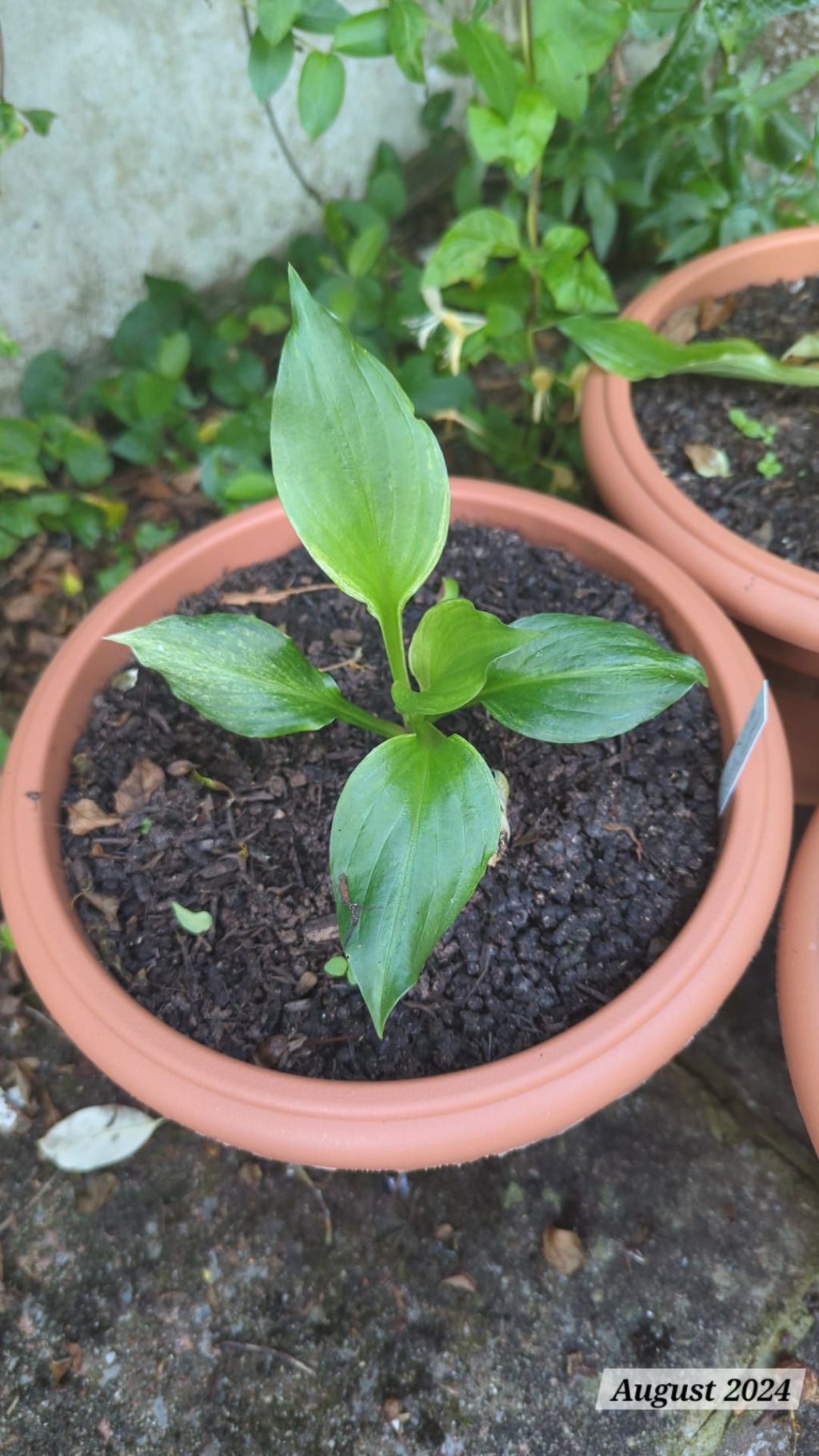
I haven’t had much time to blog recently, though I have been working out in the garden on a new area when I can. Today’s post is a short overview showing you a little side project I’ve been working on. I will be posting about the new garden area next weekend!
As the title of this blog post suggests, I, like many gardeners this year in the UK, have been battling with the amount of slugs and snails in my garden due to the prolonged cooler, wet weather we had in Spring and (the start of) Summer.
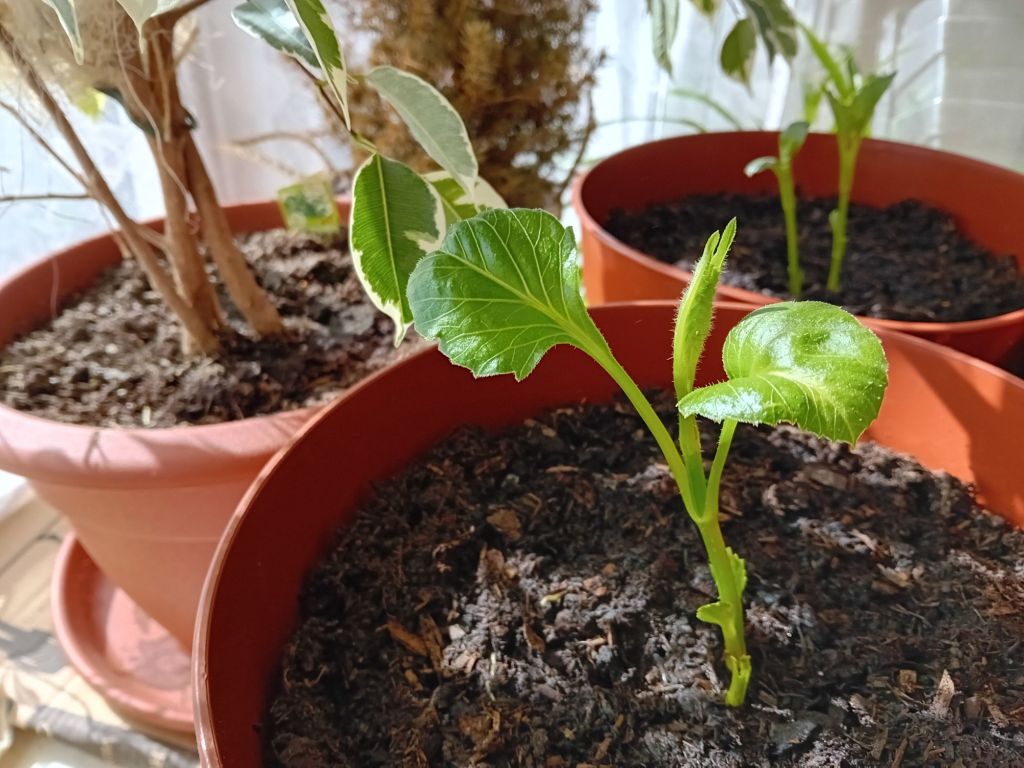
I recently received three free bare root hosta plants, called ‘White Feather’, which I potted up in June and left alone to see what happened.
Whilst I don’t mind hostas as a plant, I can’t say I have ever been particularly interested in growing hostas, mostly because any attempts I have made in the past, have always been challenging due to slugs and snails!
I therefore wasn’t holding out much hope for these hostas and I thought they would just be sacrificial plants for the slugs and snails. I wrapped copper tape around each pot and also put down organic slug pellets, though I wasn’t sure if this was going to be enough to deter the pesky slugs.
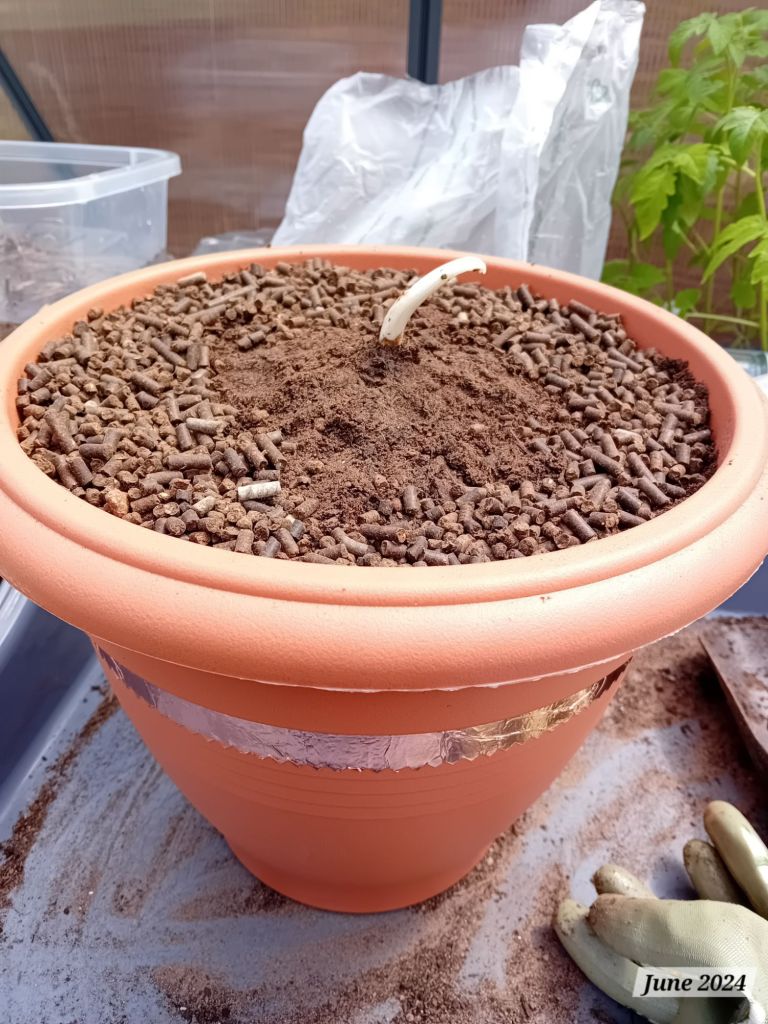
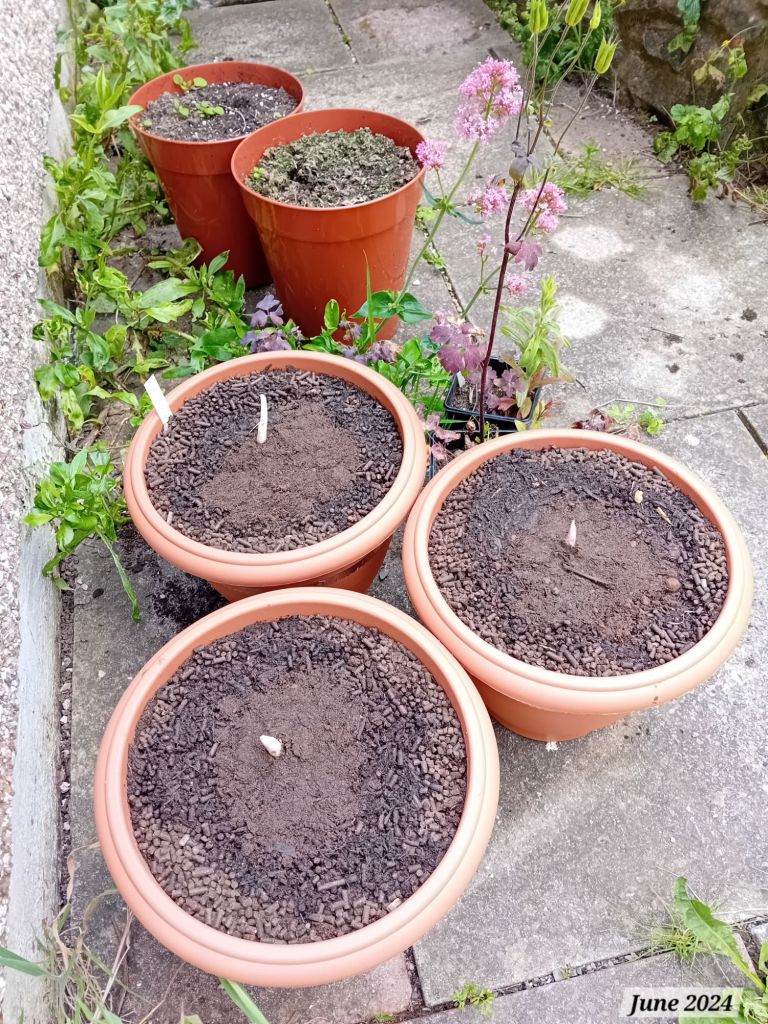
To my complete surprise, so far, the hostas have started growing well and appear largely unaffected:
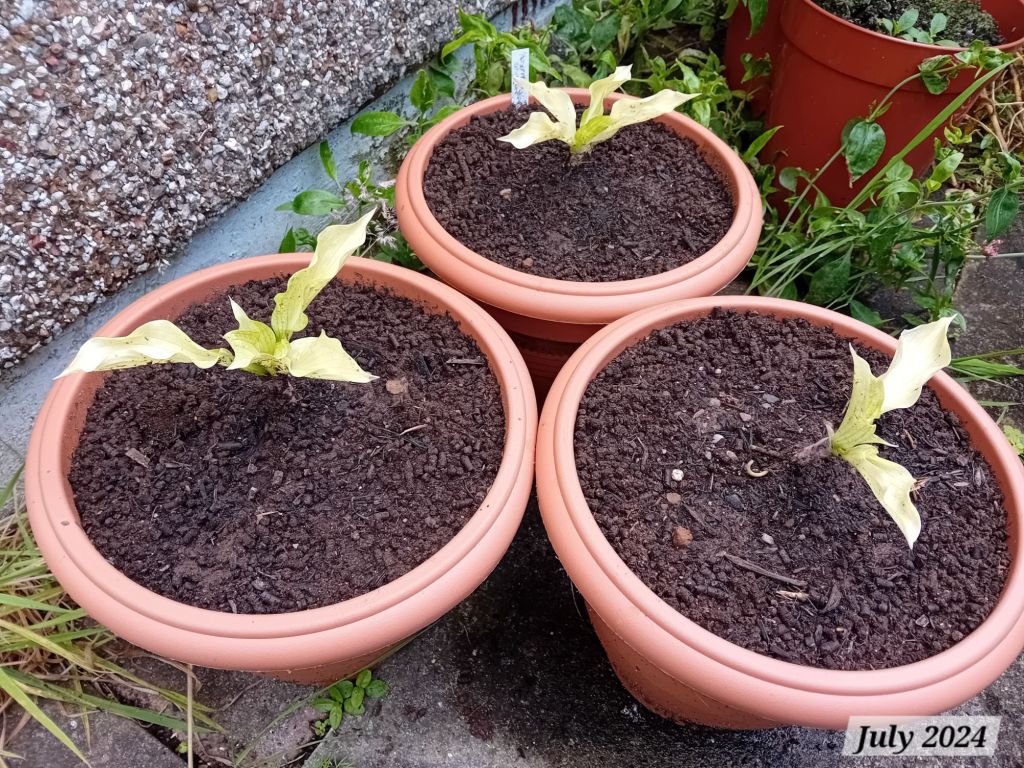
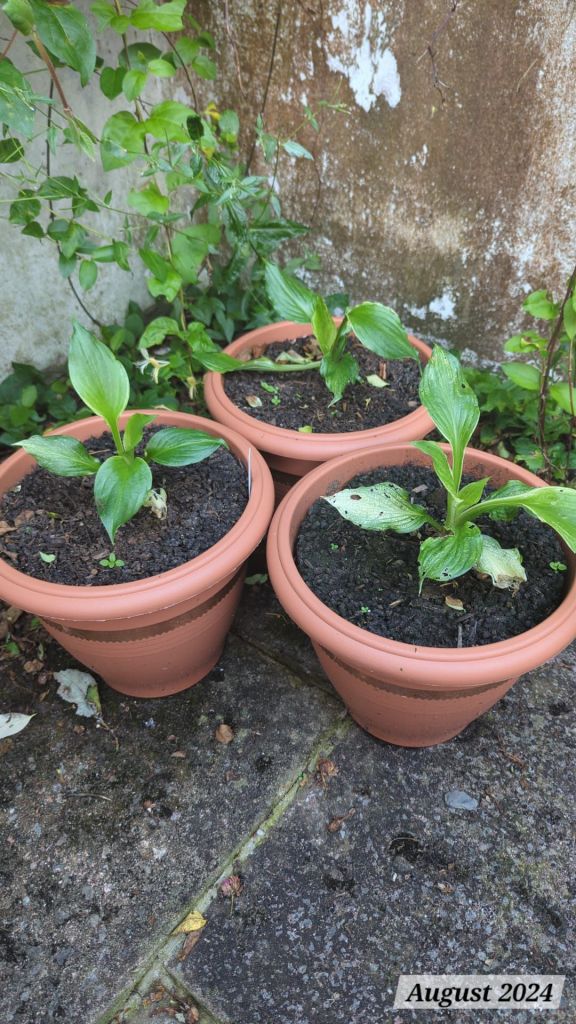
There has been some nibbling here and there, but not too bad so far:

As their name suggests, their leaves are meant to be white, but they apparently green up over Summer, tending to grow white in Spring as they emerge. I plan on leaving them in pots over Winter, so it will be interesting to see how they grow next year; hopefully their root systems will be more established by then and they should put out some good growth.
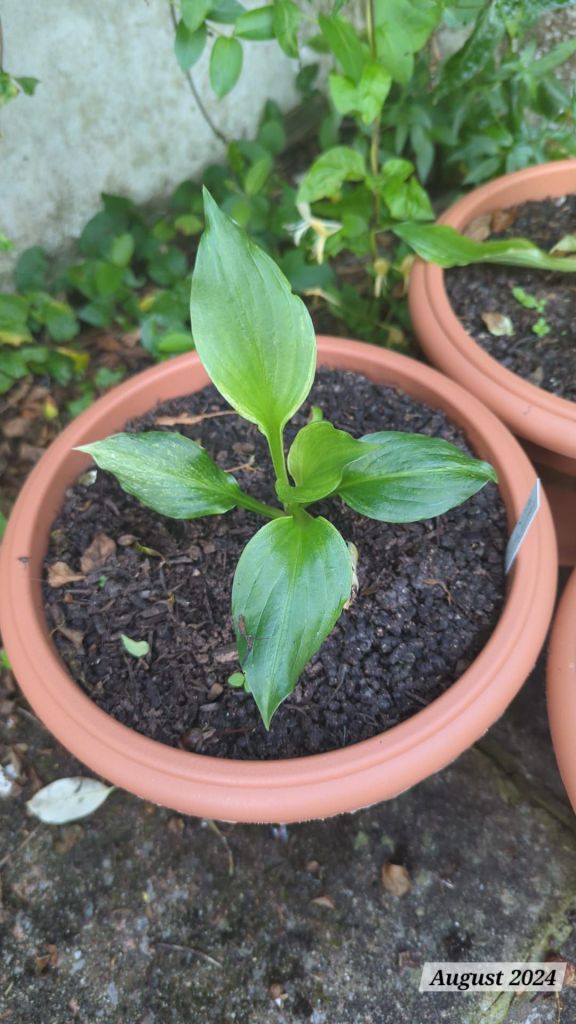
They apparently produce lavender blue flowers in the Summer, but I am likely only to see any flowers from next year, once they have established more.
In other news, we also have two hedgehogs in residence in the garden! We discovered one last year, which I called ‘Snuffles’ and now we have another, much smaller one, that has been nicknamed ‘Little Bean’. I don’t know whether they may be related, but they appear to get along.
From my own research, Little Bean may well be the baby hedgehog of Snuffles, known as a hoglet. Apparently the males don’t stay to help raise the hoglets, but female hedgehogs build a summer nest for raising hoglets, where the babies stay for 3 to 4 weeks. After that, they join the mother on foraging trips and become independent at around 6 to 8 weeks. More information is available here BBC Blogs – Springwatch – The hidden lives of hedgehogs
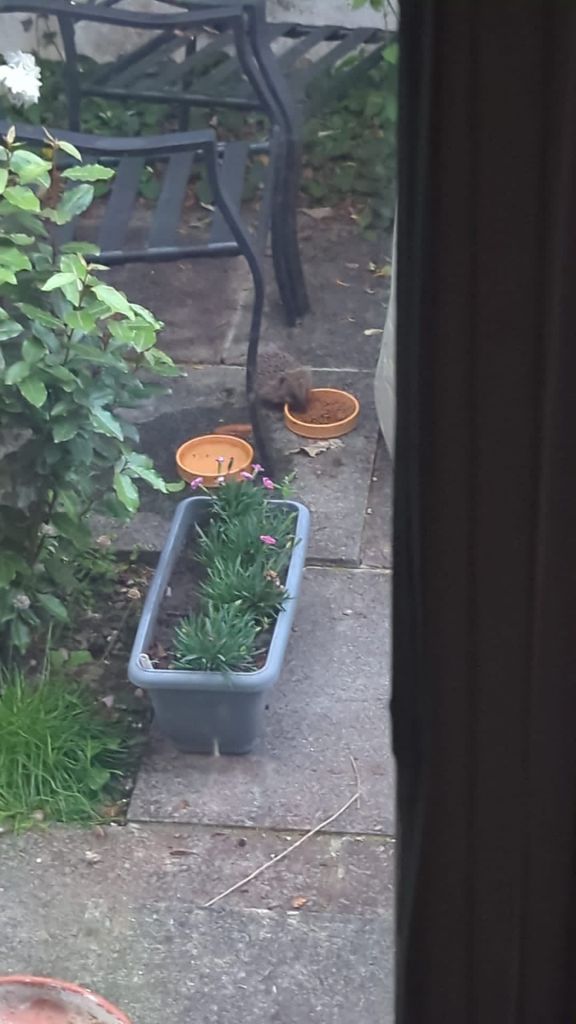
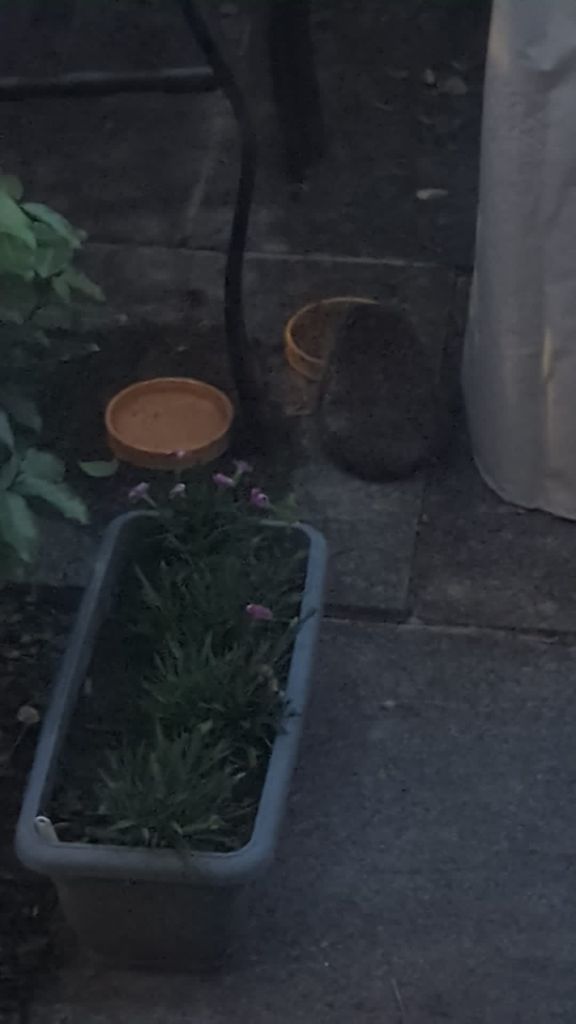
We’ve been watching the hedgehogs now most evenings and observing their habits. They appear just as the light begins to fall, when you can hear them start to snuffle around all the foliage. They then wander down the steps of The Wild Borders, from where they appear to be living in the honeysuckle. Little Bean always eats first and then Snuffles later. We have been feeding them kitten food and leaving fresh water out each evening.
I have read some advice which says not to keep regularly feeding hedgehogs, but I’ve been concerned to take away their food source if they are struggling this year. Hedgehogs apparently prefer the smaller slugs and don’t touch the larger slugs that appear to have multiplied in our garden this year.
For those gardeners who like helping the wildlife in their gardens and tracking any sights, there is a hedgehog watch due to their decline in numbers, which you can access here: Map your hedgehog sighting – BIG Hedgehog MapBIG Hedgehog Map
I have also noticed the birds have continued eating bird seed throughout this year, probably due to the lack of insects available for them due to the weather. I think generally, it’s been quite a tough year for wildlife in the garden due to the weather, so it’s nice to be able to help wildlife where we can.
That’s all for today. I will be putting some more posts up soon. Happy gardening 🙂

 The Charming Nook
Leave a comment