
Hello and welcome back to my blog. For new readers, please note that I post weekly updates every Sunday morning 🙂
Introduction
Today’s post shows you some inspiration I have taken from other fruit gardens around the UK and tells you about some of the planting I have started in The Fruit Garden. This is an area of the garden I introduced very recently in this post: A new fruit cage. If you are a new reader, you may like to read that post first so you can see how the area has developed.
I have major plans for The Fruit Garden area once Autumn properly arrives in the UK. Although the temperature appears to be dropping in the evening and at night recently, we are forecast some warmer weather for September 2024, though we will have to see over the coming weeks how it progresses. If the weather is warmer, I will stall on my plans for the area until the temperature falls.
The Fruit Trees
I purchased some bare root patio fruit trees from Thompson and Morgan way back in January/February 2024. For those that might be interested in buying their own, here is where I purchased them from: Fruit Tree Collection
Each tree is self-fertile and on a dwarf/semi-dwarf root stock. The varieties are:
Apple ‘Golden Delicious’ – Pollination Group 4 – Cooking and Eating Apple – This easy to grow variety produces good yields of attractive golden-green apples that store well over a long period after harvesting. Rootstock: M9
Apple ‘Gala’ – Pollination Group 4 – Eating Apple – A reliable cultivar producing attractive, red flushed fruits with a surprisingly sweet flavour when eaten straight from the tree, and make a delicious juicing apple. Rootstock M27
Pear ‘Conference’ Pollination Group 3/Self-Fertile – Eating pear – The best known of all pears, ‘Conference’ is excellent eaten as a dessert pear but also exceptional when cooked. The long bell shaped fruits with firm flesh can be eaten hard or fully ripe with a smooth juicy flavour. Rootstock: Quince A
Plum ‘Black Amber’ – Self-Fertile – Eating Plum – This heavy bearing Plum produces plenty of rounded, firm purple fruits with a deliciously juicy texture. Rootstock: Ferlinane
Cherry ‘Sylvia’ – Self-Fertile – Eating Cherry – This dwarf cherry tree is perfect for the patio where it makes a great focal point in spring as pale pink cherry blossom cloaks the branches. Rootstock: Gisella 6
These trees were a bargain when I purchased them in Winter, (around £25/30) due to being bare roots and they are now advertised for much more, as they are in the green. I would recommend waiting until Winter time for anyone who is interested in purchasing their own fruit trees, as the prices really come down when purchasing bare root plants.
When the trees arrived, I simply potted each of the trees up into large pots and then left them on the patio in The Honeysuckle Nook for the last few months.
Then over the last few months, I spent time visiting other fruit gardens for inspiration…
The inspiration
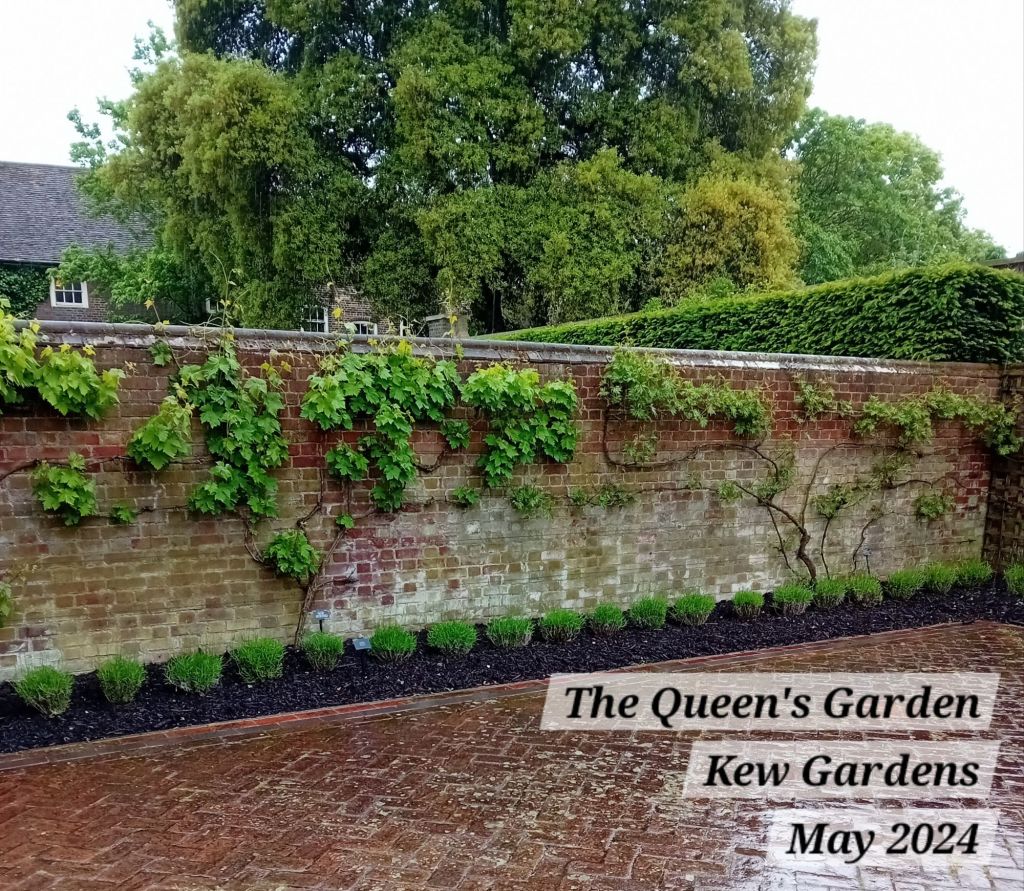
On visits to gardens around the UK this year, including Kew Gardens, which I posted about here and also RHS Rosemoor and RHS Bridgewater, I’ve always loved looking at the fruit trees that have been trained into shapes. I wanted to take inspiration from these ideas and use them in my own garden.
I love how training fruit trees into shapes increases not only their production, but also their beauty all year round. Even in the dead of Winter, the empty boughs of a well-trained fruit tree look beautiful and add some interest in the garden.
Kew Gardens
Here is some of the inspiration I took away from Kew Gardens:

RHS Rosemoor
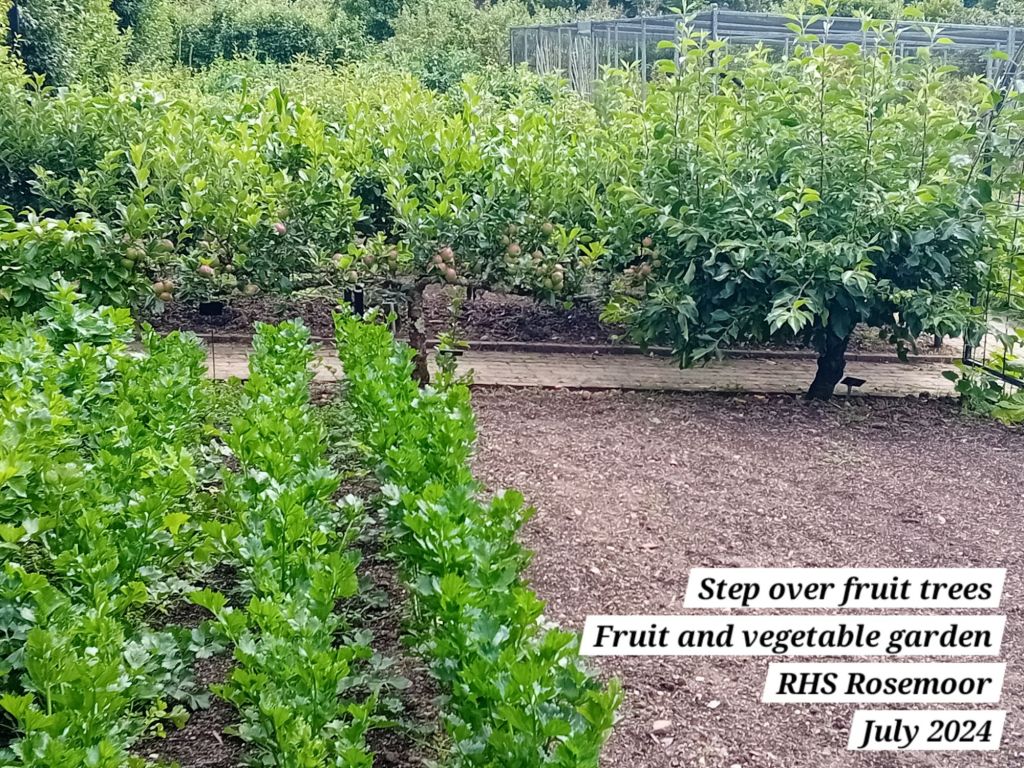
Here is some inspiration from RHS Rosemoor:

I love the look of these step-over fruit trees and they take up so little space:
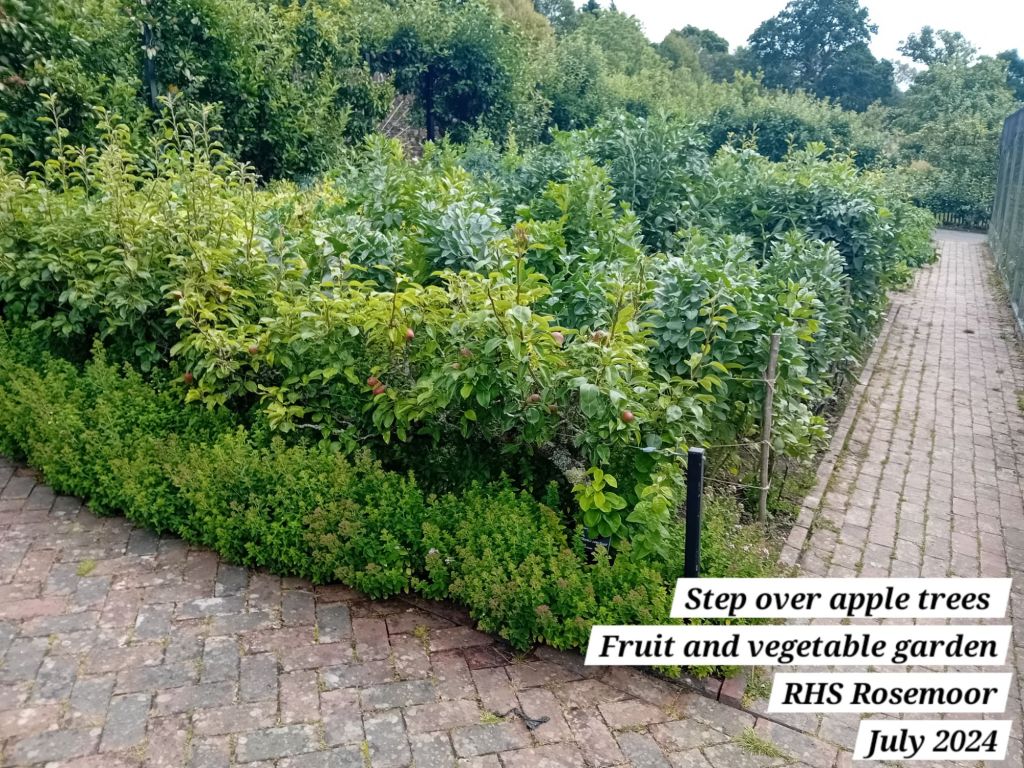
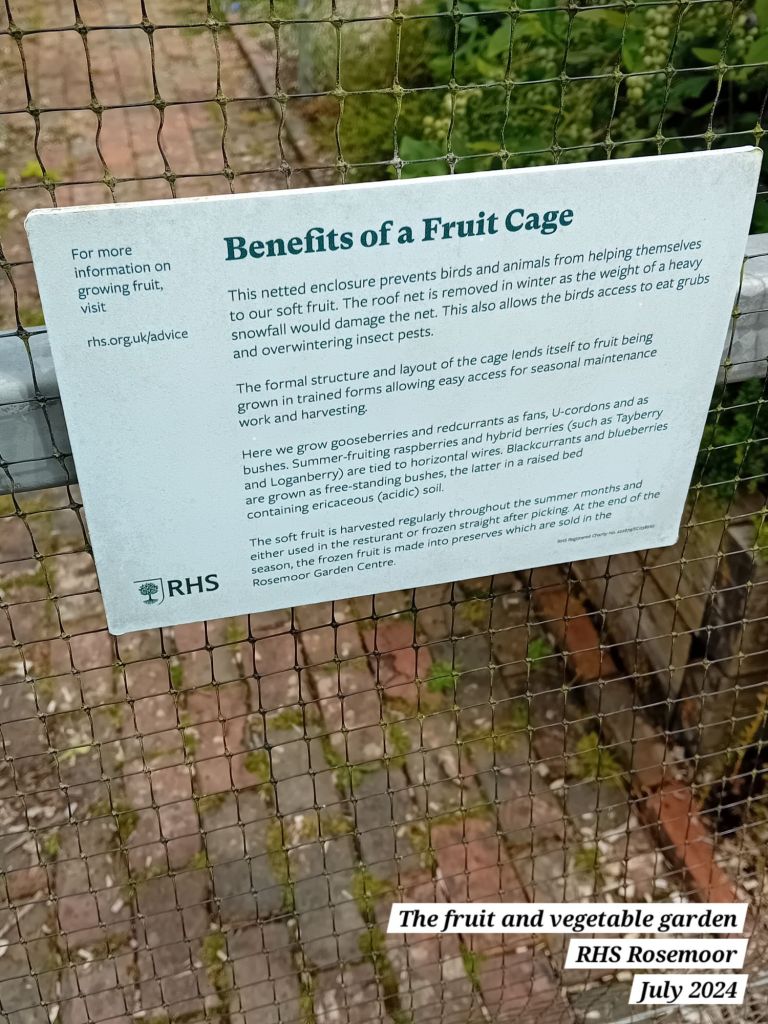
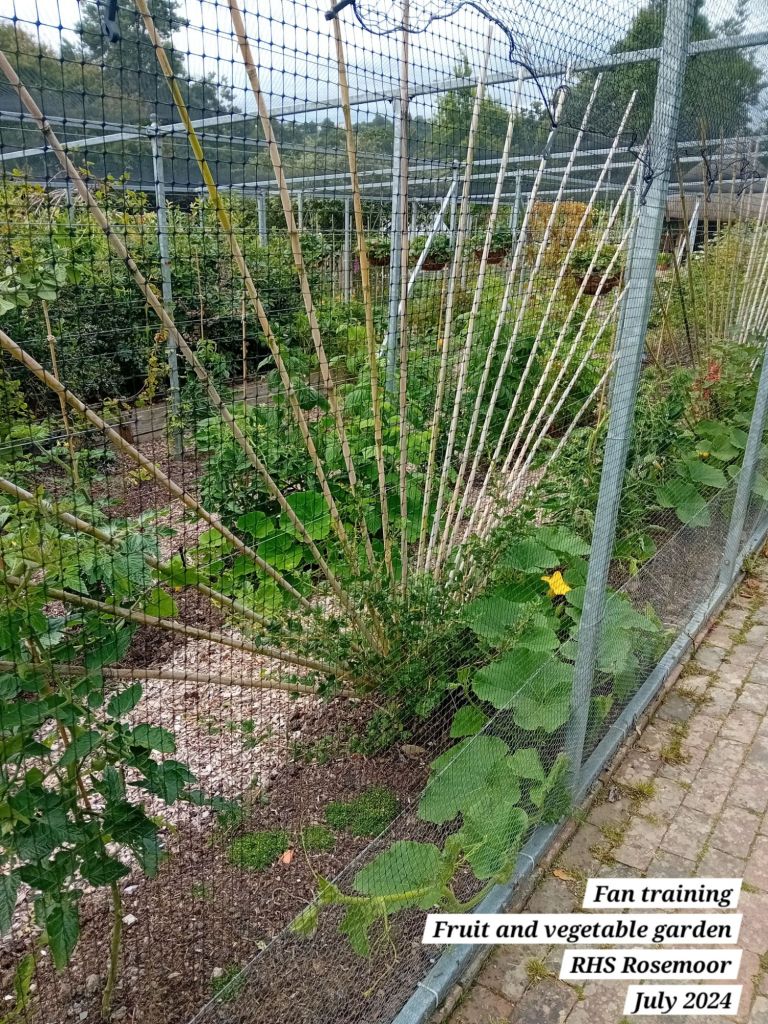
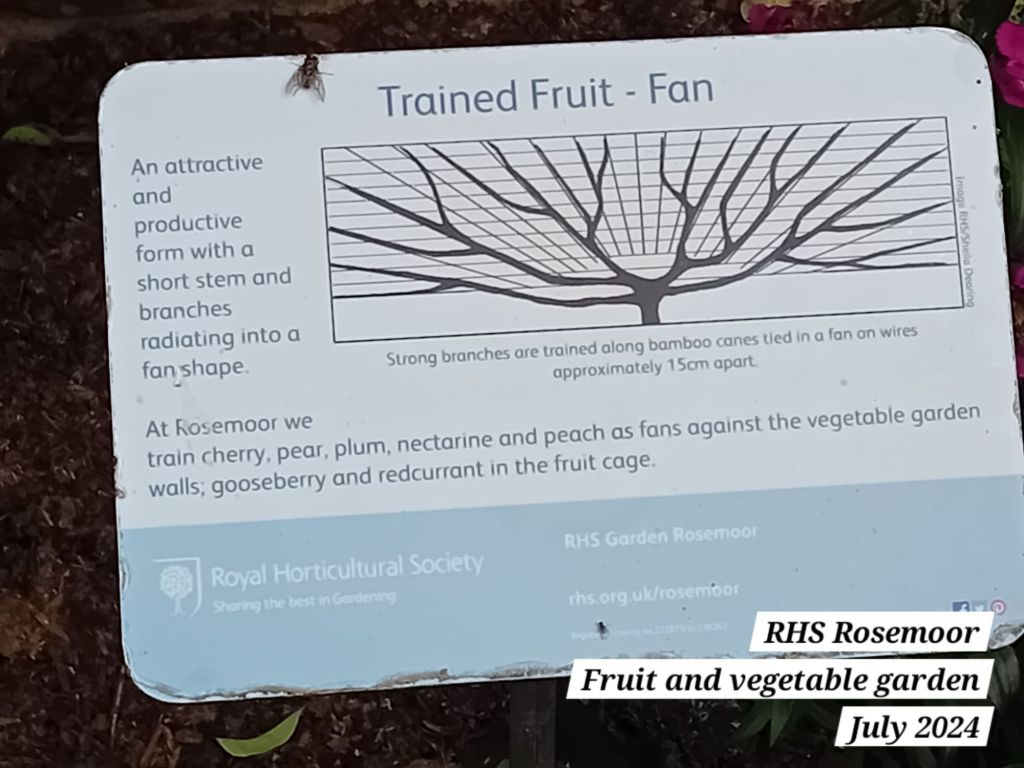
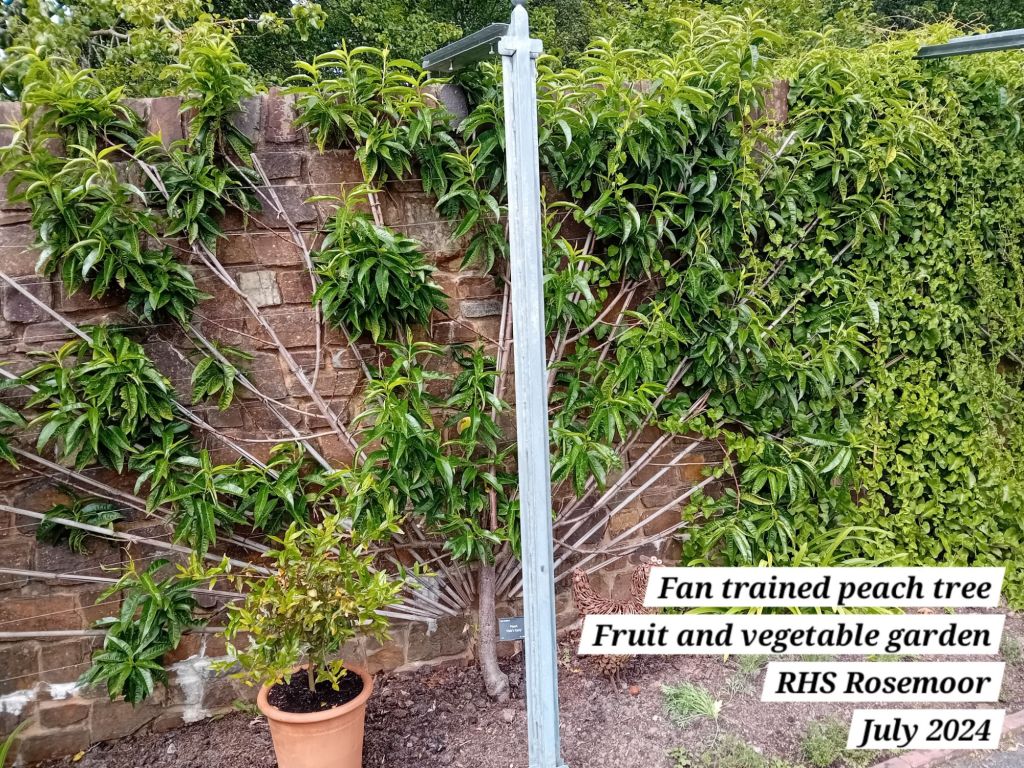
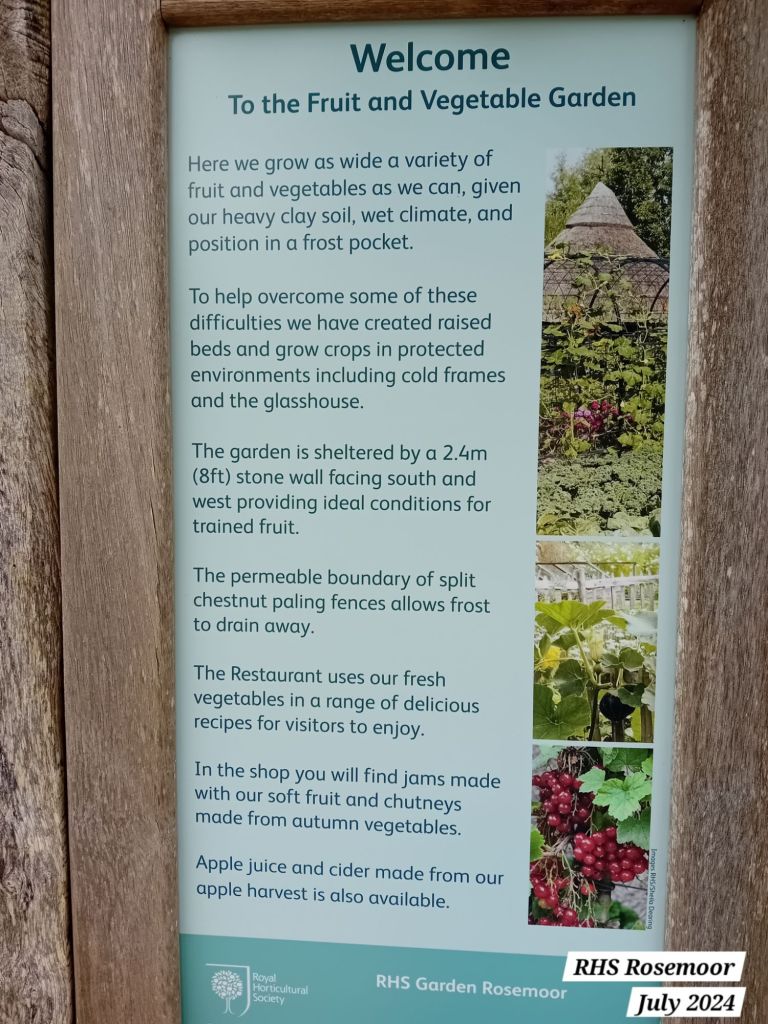
I plan on incorporating some flowers into The Fruit Garden over time, once I have established the main structures of the garden. RHS Rosemoor gives some great ideas for this and highlights the benefits of doing this:

RHS Bridgewater
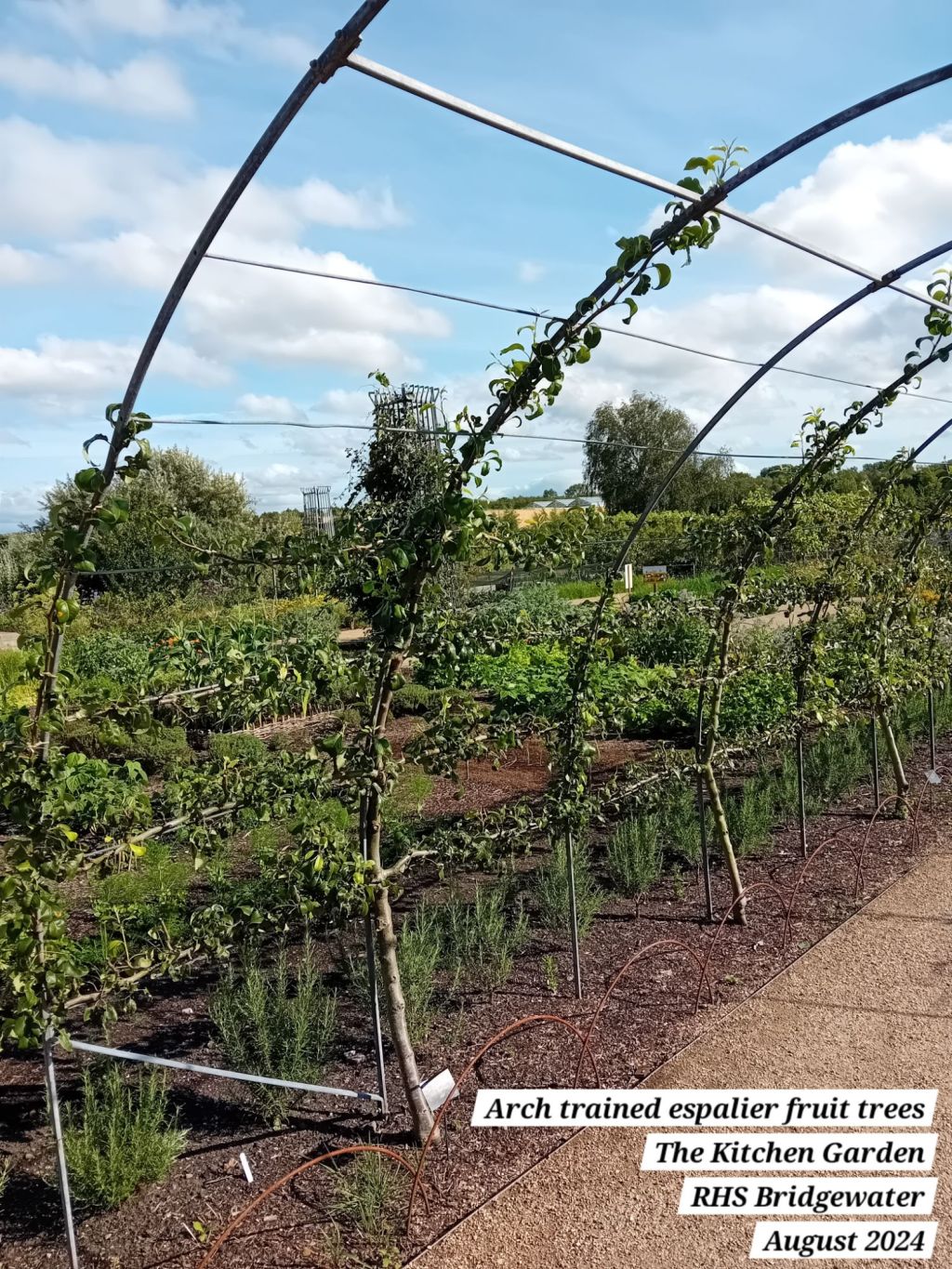
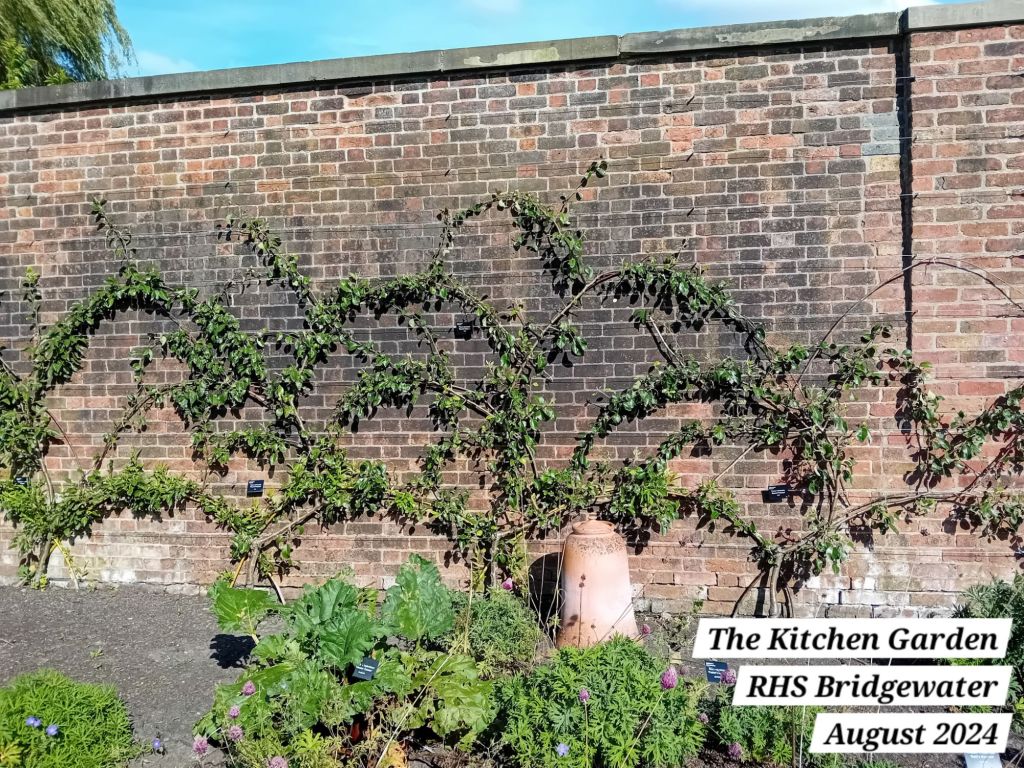
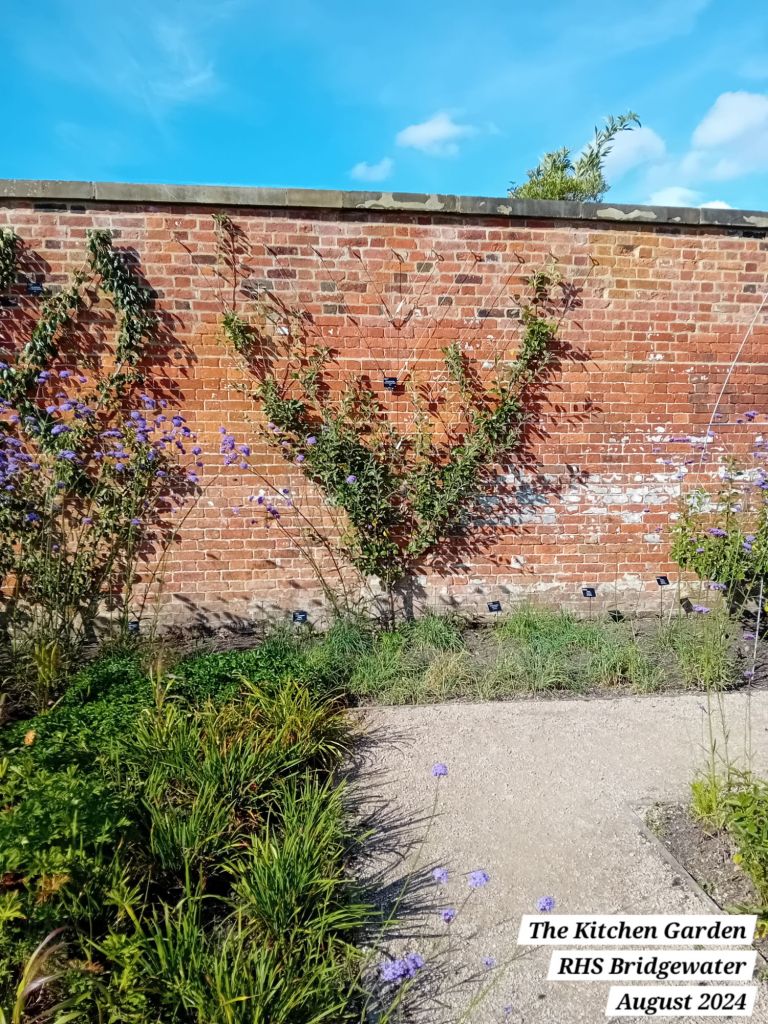
I also recently visited RHS Bridgewater and I loved all the trained fruit trees in their kitchen garden.
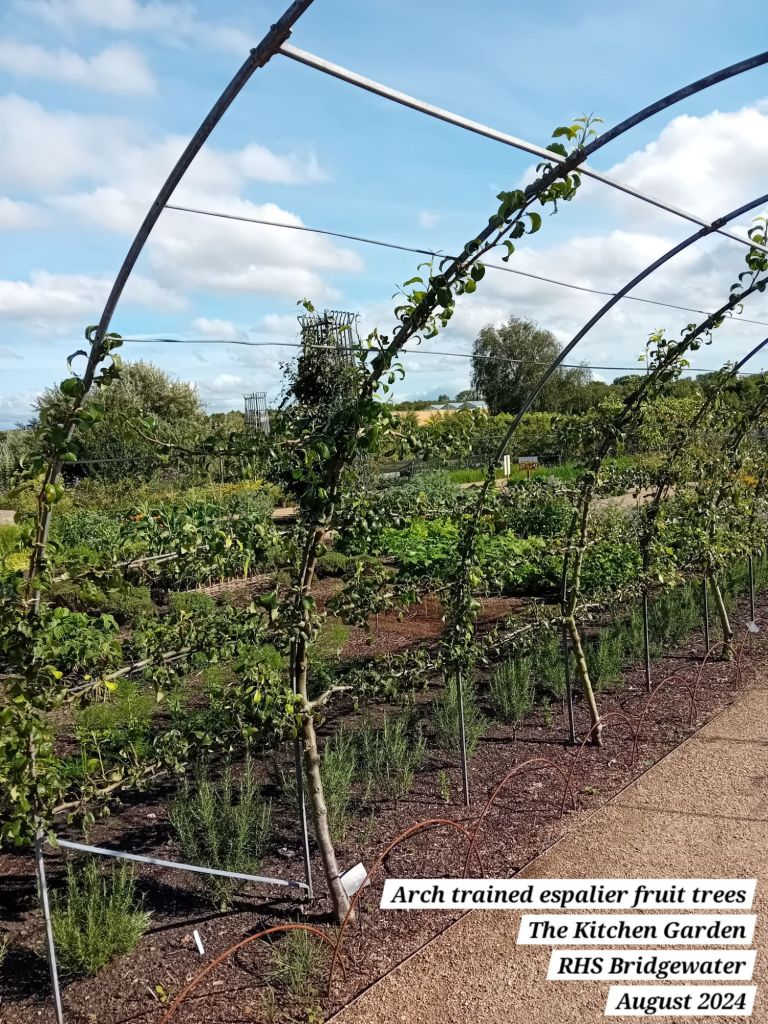
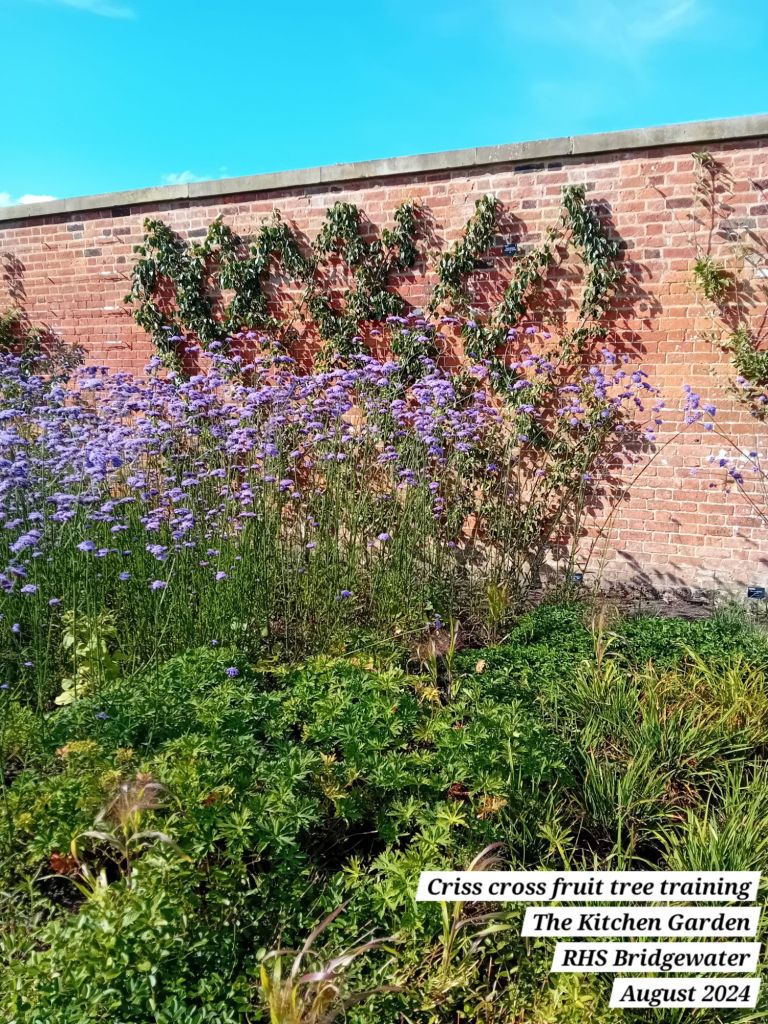
This is a slightly different style of fruit training, curving the branches, which is apparently how the French train fruit trees:
One thing I notice from my visits to fruit gardens where they have used fruit cages is that any planting has to be set back from fruit cage netting, to prevent birds from getting to it.
I am taking note of how RHS Rosemoor have used fan training for gooseberries and redcurrants in their fruit cage… it may be something for me to consider at home.
The start of planting
Since the fruit cage was erected in July, my long-term plan was to start developing the layers of fruit in the area and I decided I wanted to start by planting a few of these fruit trees to get them out of their pots.
If you’ve been reading along with my blog, you’ll recall that there is a small patio area within The Fruit Garden, which currently allows for seating. I had moved all the fruit trees in their pots up to that area so they could get used to their new position in the garden.
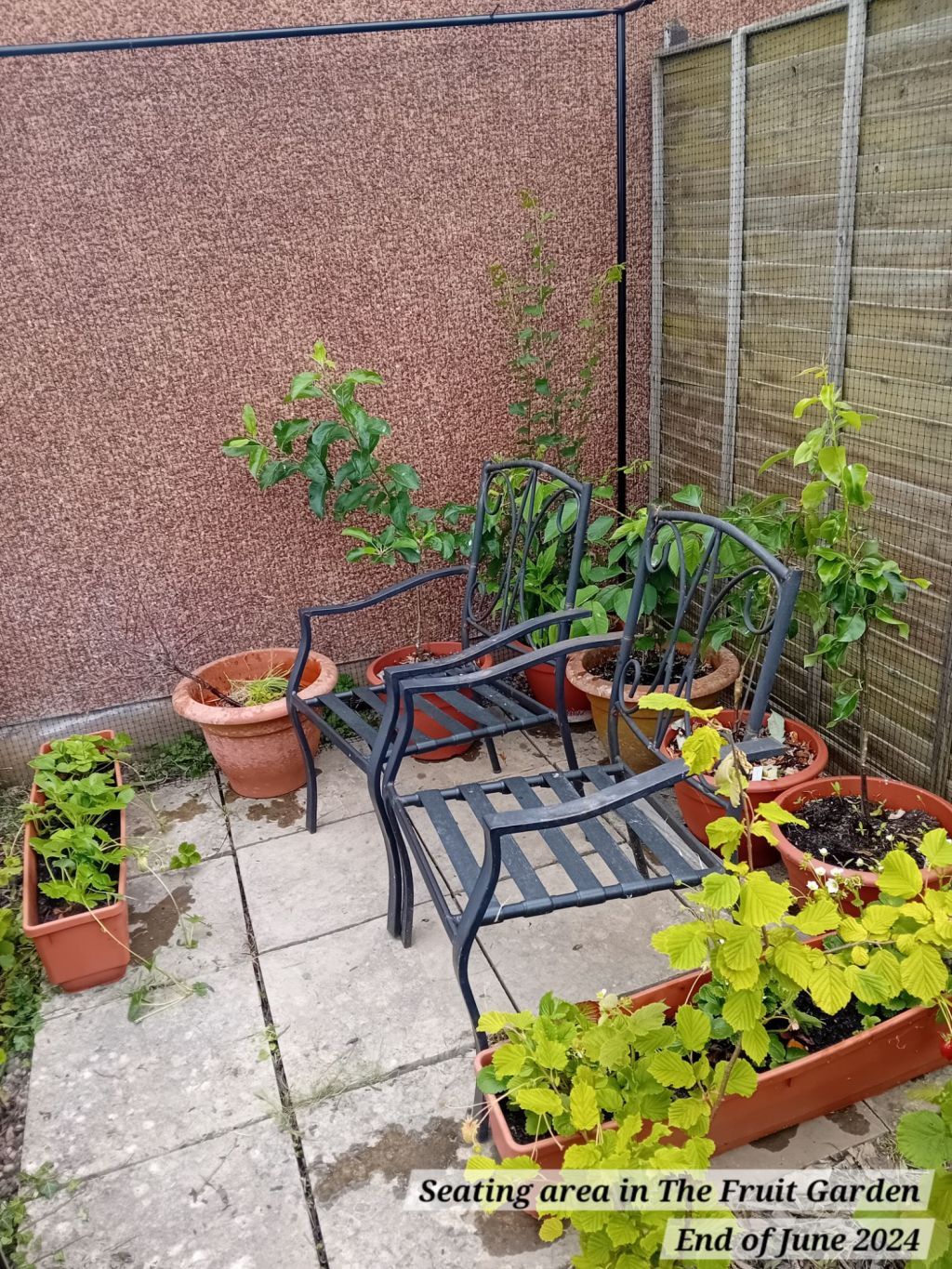
I decided that the corner nook of that patio would be perfect for training two of the fruit trees. Here is how that area looked in June this year:
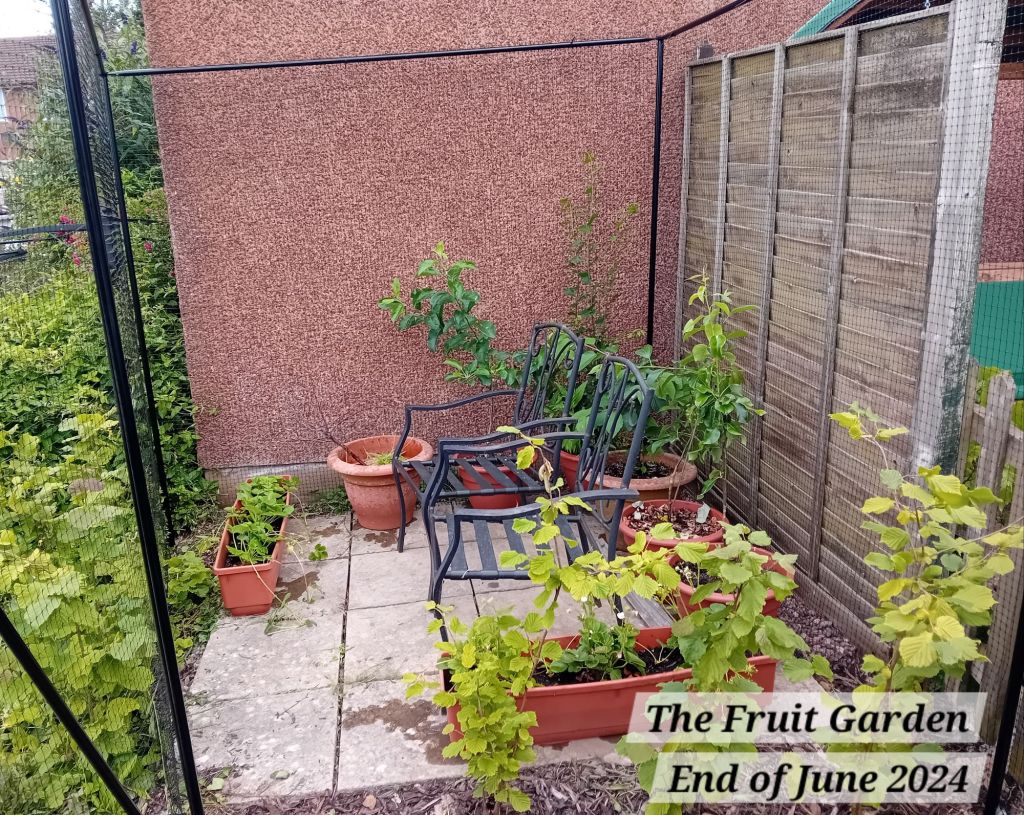
This is a nook that gets the sun for the majority of the day and the last of the sun in the evening, so it is perfect for fruit trees.
I also know that using a fence or a wall for training fruit gives great protection and warmth, which assists with fruit production and plant growth. The wall and the fence face South-West.
The fence panel faces into the rest of the garden and can be seen from the house, so when the Spring blossom emerges, it will look really beautiful over time when looking at the garden from the house.
Here is how the nook was looking before any work started:

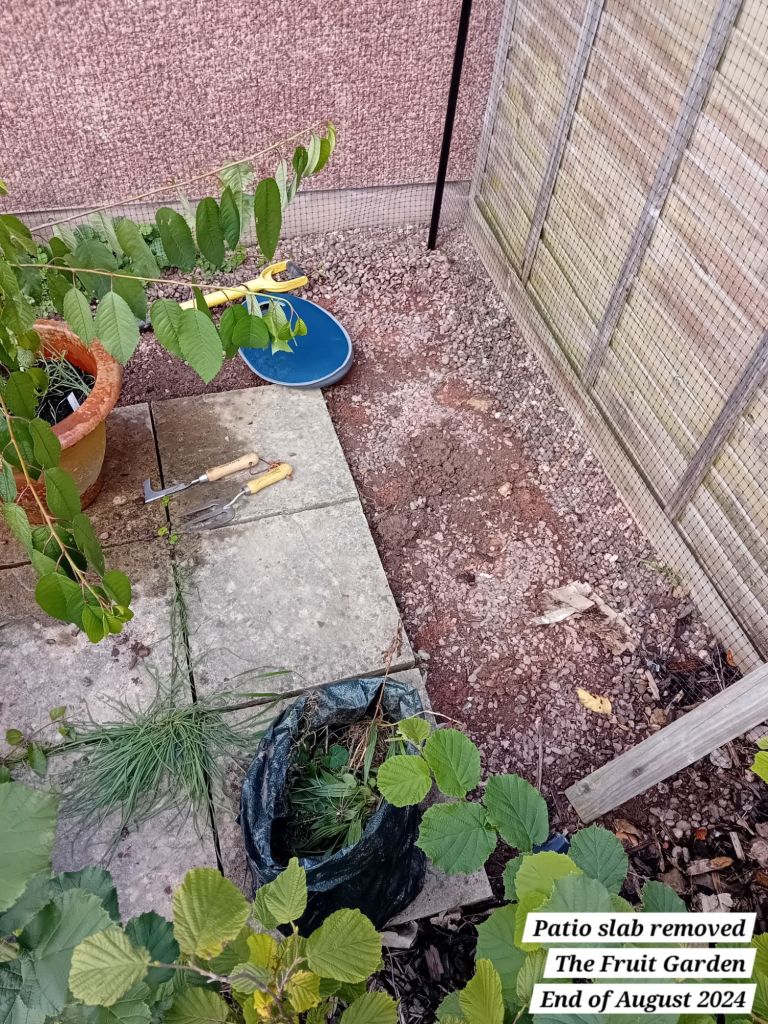
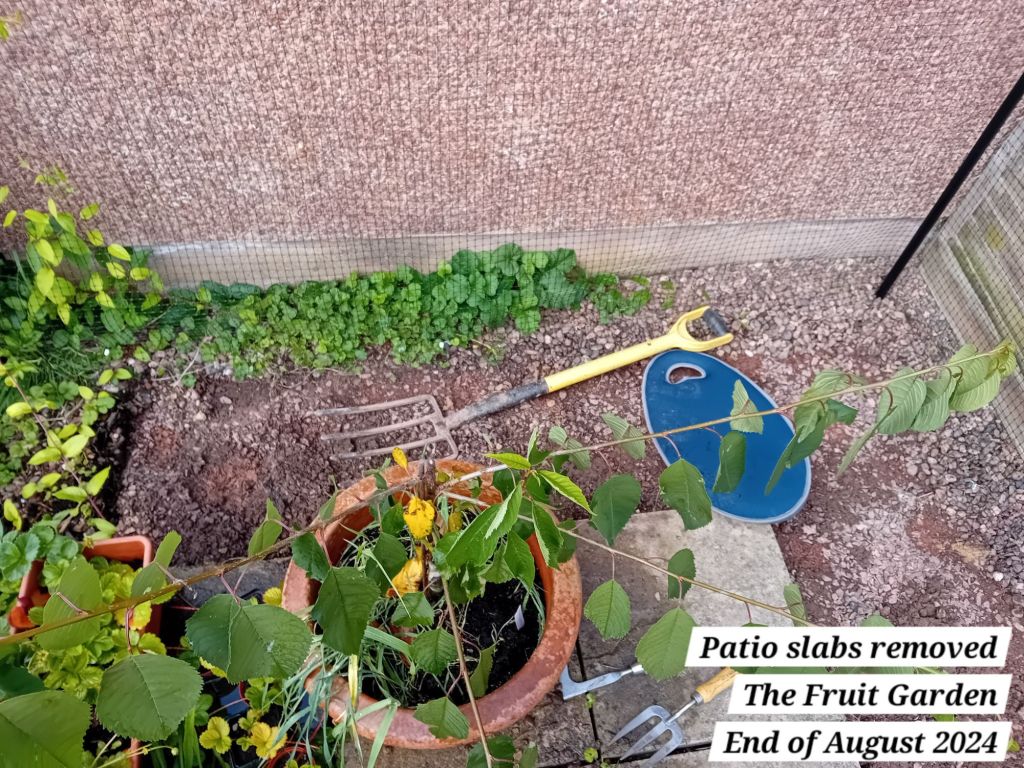
To start with, I removed a line of paving slabs on the sides of the patio nearest to the wall and the fence. This is to allow the fruit trees to be set away from the fruit cage. I will have to install some structural support for the fruit trees. but that isn’t an urgent job right now.
The wall also belongs to a neighbour, so I am taking care not to grow anything up against it.
I then planted out each tree:
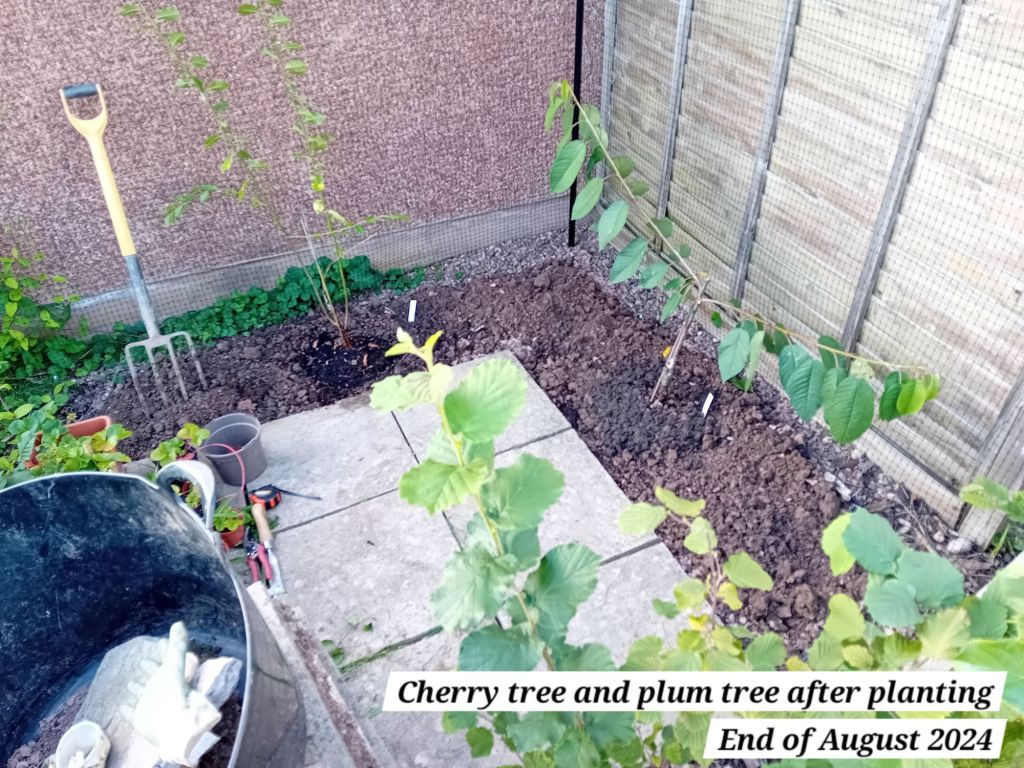
The ‘Sylvia’ cherry tree looks to have taken really well (see below) and I gave it an initial pruning after planting, but I will wait until next Spring until I do any further pruning because now isn’t the right time.
This tree just grew into the shape pictured, which is another reason why I considered fan training.

The ‘Black Amber’ plum tree on the other hand doesn’t appear to have taken as well. I only noticed after planting that much of the growth I saw was actually from the root stock, below the graft line. I pruned all of that growth off and saw some slight growth from the ‘Black Amber’ scion cutting, so time will tell if that will take. I suspect that the root stock zapped a lot of energy from the cutting and that has impacted on its ability to grow strongly.
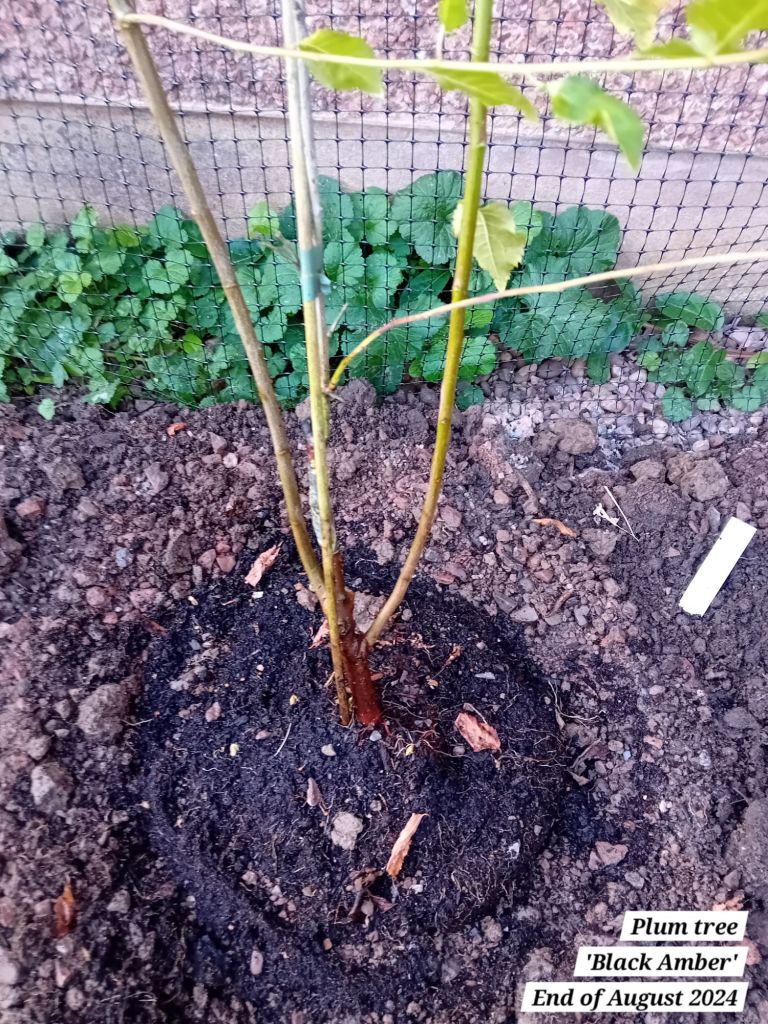
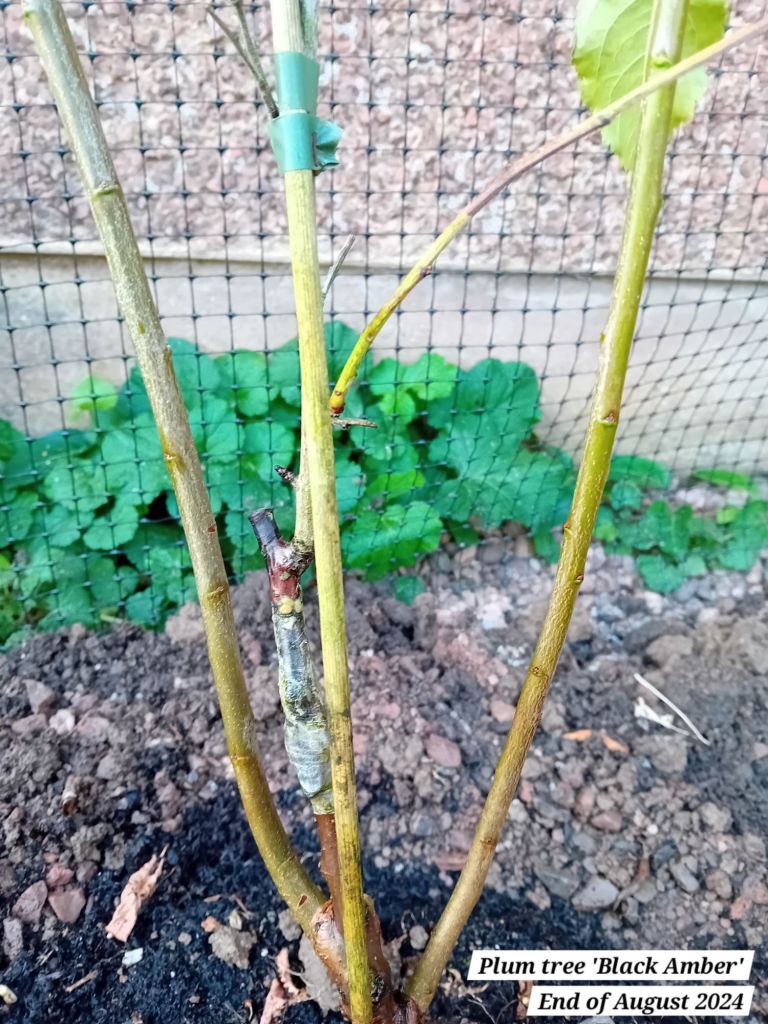
I will leave both trees alone for now and keep an eye on them. If it becomes clear that the ‘Black Amber’ tree hasn’t taken, I will just replace it with another stone fruit tree. I have my eye on a peach tree if the plum tree fails!

I still have more plans for this area of the garden, which I will be posting about over the coming weeks.
I will be moving all of the hazel hedging out of the area. It has taken really well and I had been considering whether to keep it in that area of the garden, but I think it will take up too much space. I also originally put in that hedge because it is native to the UK and I wanted it to support the local wildlife. If I keep it in the fruit cage, it completely defeats that purpose.
I will be replanting the hedging (once it has gone dormant) into an area of the garden where I plan to install a new 3-bay compost heap eventually. That area of the garden already has some beech hedging installed, so the mixed hedging will provide benefits to wildlife, as well as screening for the compost heap.
I also plan on installing an archway to create an entrance to the patio area in The Fruit Garden. I will grow the apple trees as espaliers up over the archway, which will look really nice, keep their size well contained and also increase their production. The photo below is the inspiration from the archways seen at RHS Bridgewater. I will obviously be doing this at home on a much smaller scale:
There will also be a new area for growing raspberries and planting some other fruit bushes I recently purchased… 🙂
That’s all for today. I hope you enjoyed reading today’s post and seeing how The Fruit Garden has started to develop. There will be more updates over the coming weeks! Happy gardening 🙂


 The Charming Nook
Leave a comment