

Hello and welcome back to my blog 🙂 Today’s post is another in the series called ‘plant in focus’, where I periodically look in more detail at a plant in my garden. The first post in the series is available to read here.
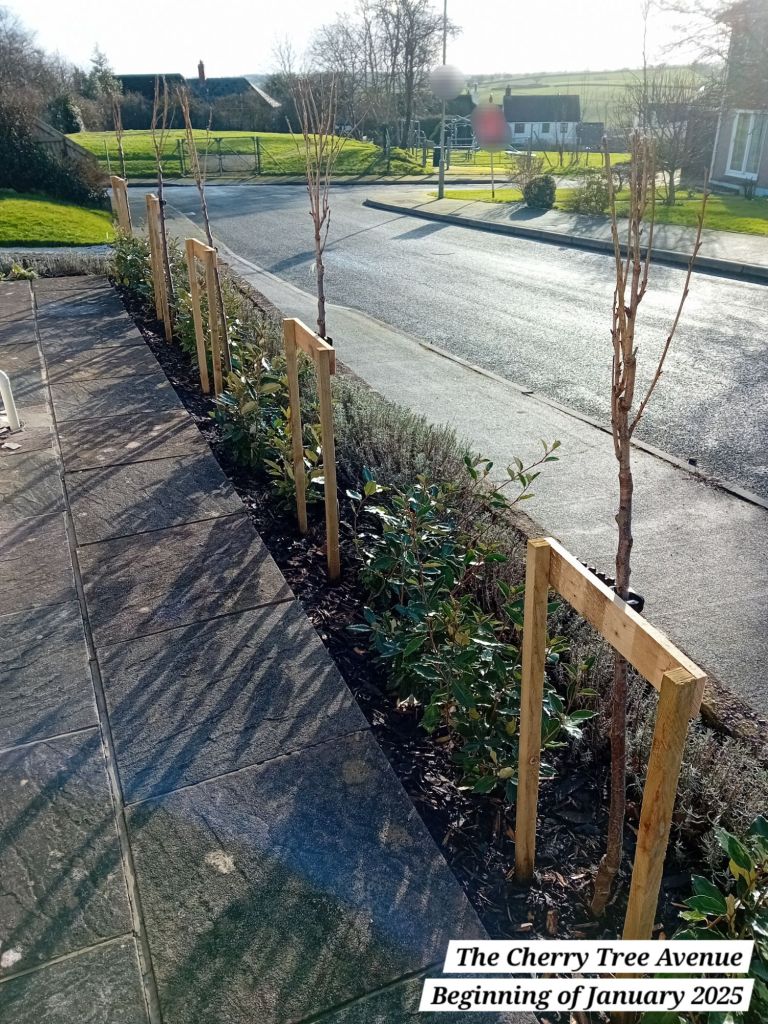
Today’s post is about the nine new cherry trees that I recently planted in one of our front gardens, The Cherry Tree Avenue:
I hope you enjoy reading this post 🙂
Table of contents
- Table of contents
- Key facts
- Historical meanings associated with cherry blossoms
- The ‘Amanogawa’ name 天の川
- Conclusion
- Sources
Key facts
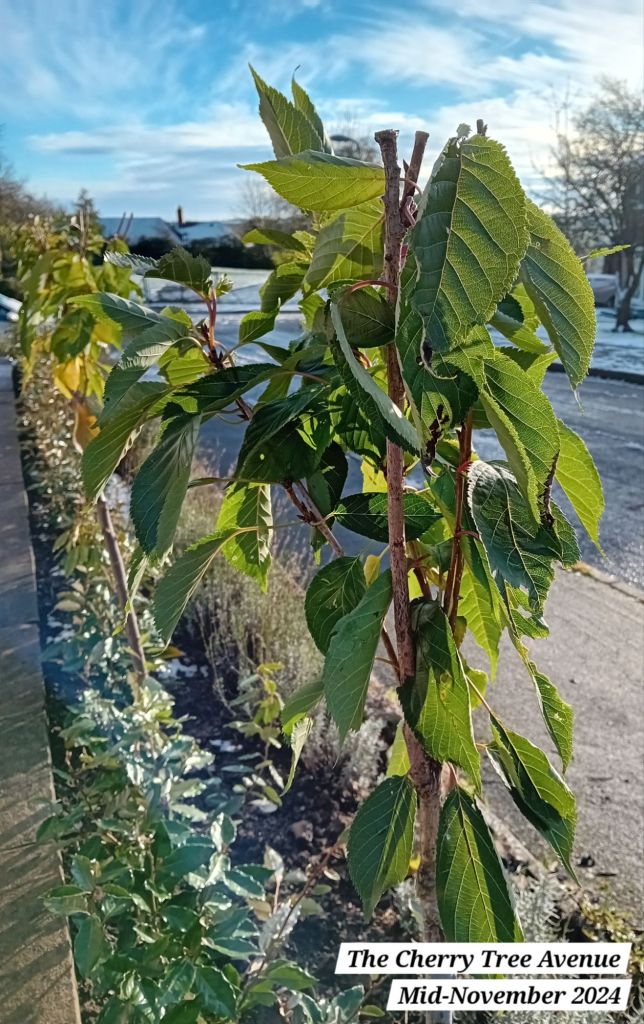
Botanical name: Prunus serrulata ‘Amanogawa’
Plant family: Rosaceae (the rose family)
Common name: Flagpole cherry, columnar japanese cherry
Wildlife and environmental benefits: There are a number of great ecological benefits that follow when cherry trees are planted:
- Wildlife: Cherry trees are attractive and beneficial for wildlife; they provide food, shelter and a nesting site for birds. Their blossoms are also attractive to and beneficial for pollinators like bees and butterflies.
- Air quality: They improve the air quality where they are planted because they absorb carbon dioxide from the air and release high levels of oxygen from the photosynthesis process.
- Leaves and bark:
- The leaves and bark of cherry trees trap harmful pollutants on their leaves and bark, effectively acting as a natural air filter.
- Due to the deciduous nature of this tree, when the leaves fall on the ground in Autumn, they gradually decompose, feeding organisms like worms in the decomposition process. The decomposed leaves then enrich the soil naturally over time, which also improves the water retention of the soil. Overall, it is a wonderful cycle that will continue throughout the life of the tree.
Growing conditions: Cherry trees will grow in chalk, clay, loamy and sandy soil. It likes a moist but well drained soil and acid, alkaline or neutral pH for the soil. Improve drainage in heavy soils by mixing horticultural grit into the planting hole, along with a good general purpose compost.
Position: Cherry trees are hardy and will produce their best blooms in full sun. They will grow in either an exposed or sheltered site, but ideally position this tree in a sheltered spot to prevent the wind stripping the blossom. This tree grows in any aspect (North, West, East or South).

Foliage details: Deciduous leaves. In Spring, the leaves emerge as a light green with bronze tinge when young, maturing to a darker mid-green in Summer. In Autumn, the leaves turn orange and red before falling.
The leaves are ovate (egg-shaped, with a broader base and a pointed tip) to lanceolate (slim and at least three times as long as its width) in shape, growing to five inches long. The leaves are serrated on the outside margin.
Flower details: Flowers in the Spring with fragrant flowers, semi-double and pale pink in colour. The flowers grow along the branches and are about two inches in diameter, with a deep pink throat. The flowers fade to almost white and the flowers sometimes produce small black fruits. In windy locations, the blossom may be stripped from the tree.
Habit, size and shape: This tree grows as a columnar upright tree, known as a fastigiate tree. When young, the tree grows as a vase-shape. In 20 to 50 years, it can grow to 4 to 9 metres in height, to 2.5 to 4 metres wide.
Typical usage in garden landscaping: Ideal for smaller landscapes and spaces. It is often planted along a driveway or as a focal tree in small spaces.
Pests: This tree may be impacted by caterpillars, leaf-mining moths and bullfinches.
Diseases: May be impacted by silver leaf, bacterial canker, blossom wilt, peach leaf curl and honey fungus.
Historical meanings associated with cherry blossoms
Cherry blossoms have traditionally been associated with the ephemeral nature of love and life, due to the fleeting and slow-falling blossoms, which only last a number of weeks at most. Unlike many flowers, cherry blossoms do not suddenly lose all of their petals; rather, it is a gradual process with the blossom falling. It is easy to understand how this links with symbolising the transition of life, metaphorically moving from the Spring (birth) of your life to Winter (death).
Cherry blossoms are also strongly associated with rebirth and renewal. From a personal perspective, I have always associated cherry blossoms with heralding the beginning of Spring, of hope and new beginnings.
Japanese flower festival: Hanami
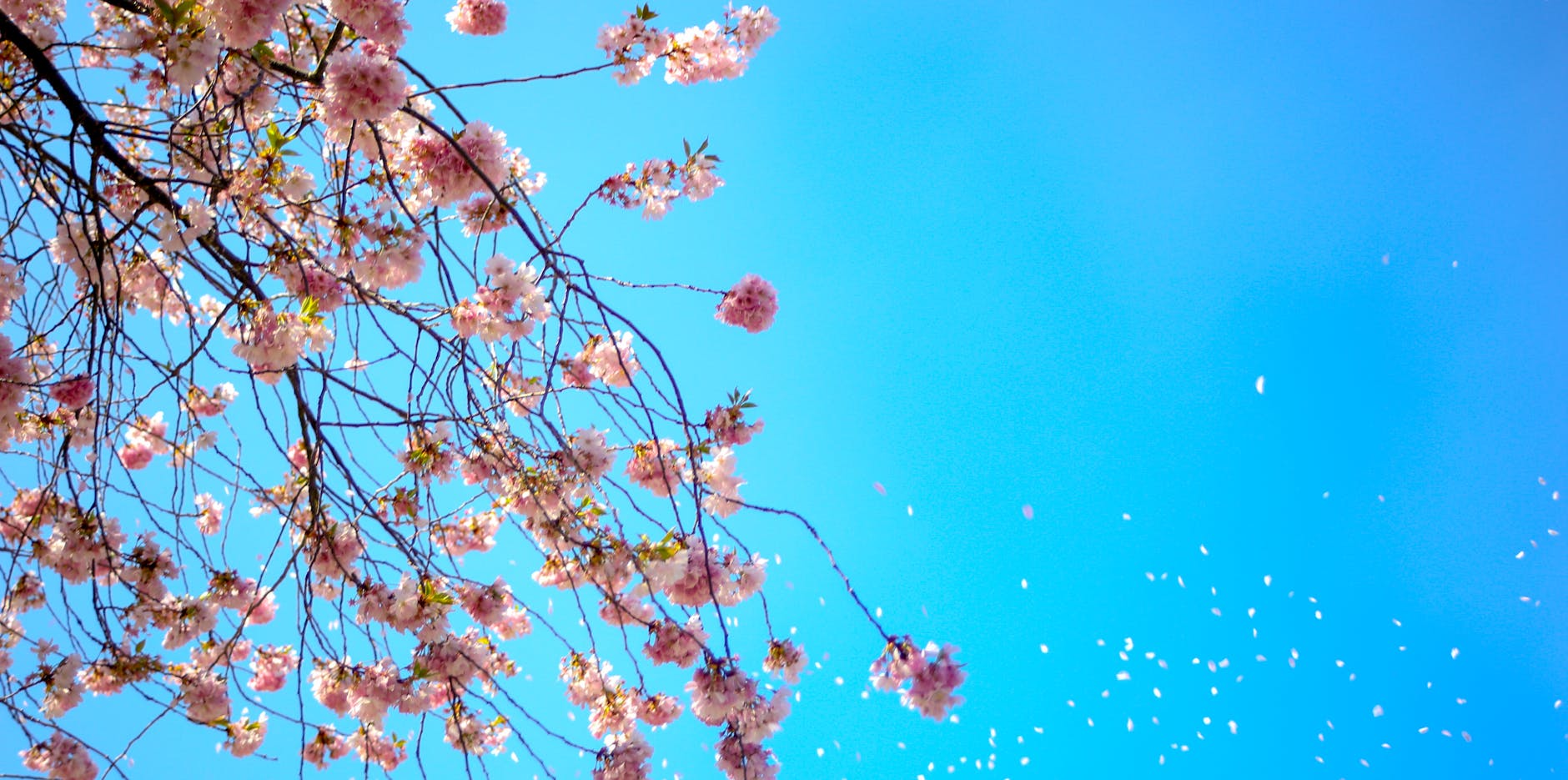
In Japanese culture, cherry blossoms are celebrated during the festival of Hanami. ‘Hanami’ literally translates to mean ‘flower watching‘. During the Hanami festival, people gather under the cherry blossom trees, where they share laughter, love and food, whilst enjoying the blossoms. It is said that in Japanese culture, the cherry blossoms symbolise different forms of loving bonds, including romantic love and platonic love between family and friends.
It is also noted that in other cultures, cherry blossoms symbolise the following:
- Western cultures: associated with Spring and new beginnings;
- China: feminine beauty and Spring’s arrival;
- Korea: the significance of family ties and the beauty of life.
The ‘Amanogawa’ name 天の川
‘Amanogawa’ is a Japanese name. When broken down, ‘Ama’ means heaven or sky, and ‘gawa’ means river or stream. When combined, ‘Amanogawa’ can be literally translated to ‘river of heaven‘, ‘sky river‘ or ‘Heaven’s river‘. The word also translates to ‘Milky Way‘.
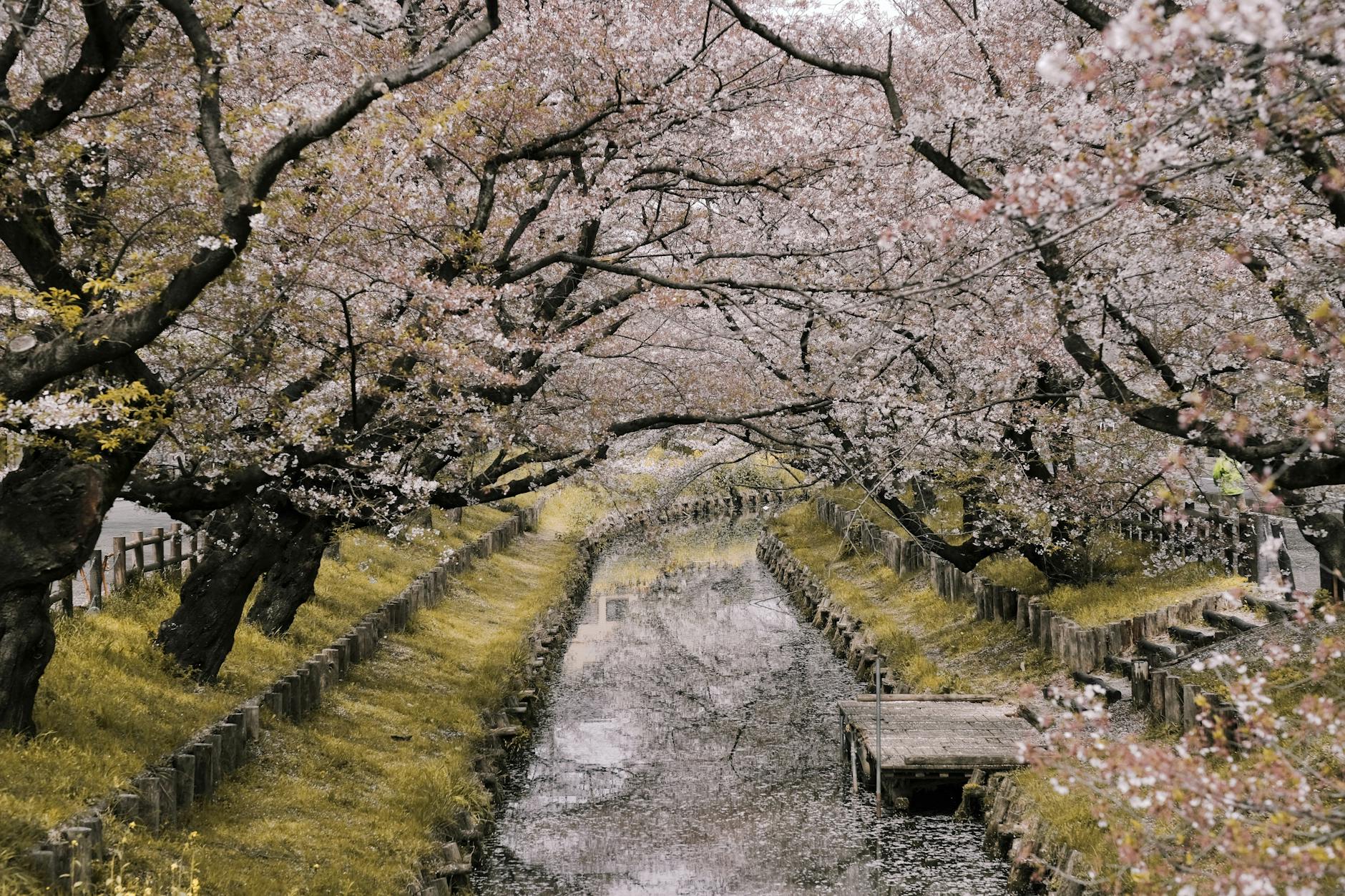
The amanogawa cherry tree was first observed along the Arakawa river in 1886.
It is reported that villagers planted cherry trees along the Arakawa river in 1886, which were a mixture of varieties and included this variety. The trees were collectively called ‘goshi-zakura’, meaning cherry blossoms in five colours and they were quite famous.
Later, the ‘Amanogawa’ was introduced into Europe in or around 1916 by the British plant collector, Ernest ‘Chinese’ Wilson.
Conclusion
I hope you enjoyed reading more in depth information about this little tree. It was fun researching this plant in more detail!
I am hopeful that I will see some blossoms this coming Spring and for the years thereafter. It will be really fun to see how all of the trees mature and fill in that area of The Cherry Tree Avenue. It should also be quite a dramatic display every year in Spring with the blossom and again in Autumn with the leaves turning orange and red before falling.
I will post updates on the trees over the coming year – stay tuned to see more!
Until next time, happy gardening 🙂
Sources
Prunus ‘Amanogawa’ (Japanese Flowering Cherry)
Prunus ‘Amanogawa’ Tree | Hillier Trees
List of plants in the family Rosaceae | Britannica, Apple, Cherry & Plum | Britannica
How Cherry Trees Benefit Local Ecosystems
▷ What does amanogawa mean in Japanese? |
What is the Japanese river of Heaven? – Geographic FAQ Hub: Answers to Your Global Questions
What is Hanami? The Fun Way Japanese Enjoy Sakura Viewing | LIVE JAPAN travel guide


 The Charming Nook
Leave a reply to The Cherry Tree Avenue: the blossom of April 2025 – The Charming Nook Cancel reply